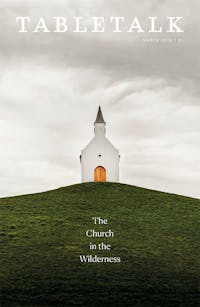

Request your free, three-month trial to Tabletalk magazine. You’ll receive the print issue monthly and gain immediate digital access to decades of archives. This trial is risk-free. No credit card required.
Try Tabletalk NowAlready receive Tabletalk magazine every month?
Verify your email address to gain unlimited access.
When we hear the word wilderness, we often think of great stretches of raw nature—places that may be beautiful, yet difficult to inhabit. Israel experienced the wilderness shortly after being delivered in the exodus. It took the people only three days before they began complaining about water (Ex. 15:24). The wilderness is a trying place to live.
You may not realize it, but you and I live in the wilderness. The whole world does. Ever since we were exiled from Eden, we’ve been journeying through this fallen and hostile world. But the difference between Christians and non-Christians isn’t their experience; it’s their identity. Non-Christians are wanderers. Christians are pilgrims, passing through the wilderness to the promised land, the new Jerusalem. But the road is long. As a result, we’re often like children on a road trip who confuse the journey itself with the destination. We grow exasperated with the inconveniences and the waiting. Our hearts quietly protest, “Will we ever get there?” Over time, this confusion hardens in one of two ways. We grow weary of the journey itself, settle into a dull sulk, and stare out the window as life passes us by, losing the energy and zeal that once marked our beginning. Or we lower our expectations and tell ourselves, “This is all there is.” We convince ourselves that gas-station food is sufficient and stiff legs are simply the cost of living. There’s another way, however. It’s the way of Jesus. His whole earthly life was marked by pilgrimage, from the wilderness temptation to being crucified on the wood of the cross. In between, He walked dusty roads, gathering disciples who followed Him without fully knowing where the journey would lead. Same wilderness, different identity: pilgrims—followers of Jesus Christ.
Following Jesus doesn’t remove us from the wilderness. But if we journey with Him, we receive His strength, His peace, and His destination (Heb. 12:22). What’s more, we receive His people. Just as ancient Israel traveled together, so the church journeys through this world as one people—beset by trials, yet united under one Lord and one salvation. And along the way, He feeds us manna from heaven, nourishing us by Word and sacrament in Christ. The question isn’t whether we’re in the wilderness. The question is whether we realize what kind of journey we’re on. Modern life tempts us to deny the wilderness, to put on rose-colored glasses and pretend that hardship is abnormal. But the Bible tells us otherwise. This life is hard. Christian life is hard. Yet Christ overcame the wilderness, and He will bring His people safely home (John 14:3).