

Request your free, three-month trial to Tabletalk magazine. You’ll receive the print issue monthly and gain immediate digital access to decades of archives. This trial is risk-free. No credit card required.
Try Tabletalk NowAlready receive Tabletalk magazine every month?
Verify your email address to gain unlimited access.
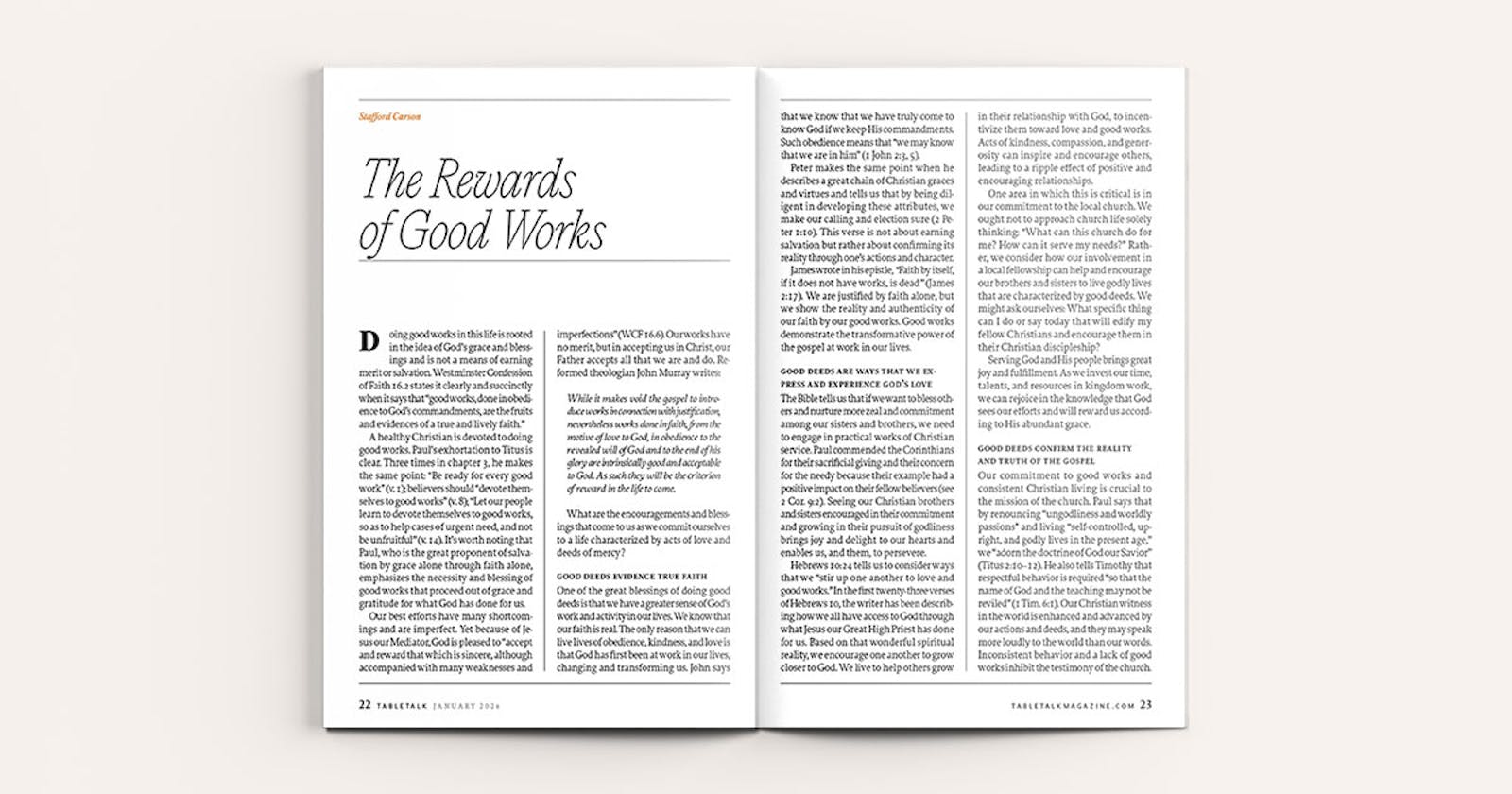
Doing good works in this life is rooted in the idea of God’s grace and blessings and is not a means of earning merit or salvation. Westminster Confession of Faith 16.2 states it clearly and succinctly when it says that “good works, done in obedience to God’s commandments, are the fruits and evidences of a true and lively faith.”
A healthy Christian is devoted to doing good works. Paul’s exhortation to Titus is clear. Three times in chapter 3, he makes the same point: “Be ready for every good work” (v. 1); believers should “devote themselves to good works” (v. 8); “Let our people learn to devote themselves to good works, so as to help cases of urgent need, and not be unfruitful” (v. 14). It’s worth noting that Paul, who is the great proponent of salvation by grace alone through faith alone, emphasizes the necessity and blessing of good works that proceed out of grace and gratitude for what God has done for us.
Our best efforts have many shortcomings and are imperfect. Yet because of Jesus our Mediator, God is pleased to “accept and reward that which is sincere, although accompanied with many weaknesses and imperfections” (WCF 16.6). Our works have no merit, but in accepting us in Christ, our Father accepts all that we are and do. Reformed theologian John Murray writes:
While it makes void the gospel to introduce works in connection with justification, nevertheless works done in faith, from the motive of love to God, in obedience to the revealed will of God and to the end of his glory are intrinsically good and acceptable to God. As such they will be the criterion of reward in the life to come.
What are the encouragements and blessings that come to us as we commit ourselves to a life characterized by acts of love and deeds of mercy?
good deeds evidence true faith
One of the great blessings of doing good deeds is that we have a greater sense of God’s work and activity in our lives. We know that our faith is real. The only reason that we can live lives of obedience, kindness, and love is that God has first been at work in our lives, changing and transforming us. John says that we know that we have truly come to know God if we keep His commandments. Such obedience means that “we may know that we are in him” (1 John 2:3, 5).
Peter makes the same point when he describes a great chain of Christian graces and virtues and tells us that by being diligent in developing these attributes, we make our calling and election sure (2 Peter 1:10). This verse is not about earning salvation but rather about confirming its reality through one’s actions and character.
James wrote in his epistle, “Faith by itself, if it does not have works, is dead” (James 2:17). We are justified by faith alone, but we show the reality and authenticity of our faith by our good works. Good works demonstrate the transformative power of the gospel at work in our lives.
good deeds are ways that we express and experience god’s love
The Bible tells us that if we want to bless others and nurture more zeal and commitment among our sisters and brothers, we need to engage in practical works of Christian service. Paul commended the Corinthians for their sacrificial giving and their concern for the needy because their example had a positive impact on their fellow believers (see 2 Cor. 9:2). Seeing our Christian brothers and sisters encouraged in their commitment and growing in their pursuit of godliness brings joy and delight to our hearts and enables us, and them, to persevere.
Hebrews 10:24 tells us to consider ways that we “stir up one another to love and good works.” In the first twenty-three verses of Hebrews 10, the writer has been describing how we all have access to God through what Jesus our Great High Priest has done for us. Based on that wonderful spiritual reality, we encourage one another to grow closer to God. We live to help others grow in their relationship with God, to incentivize them toward love and good works. Acts of kindness, compassion, and generosity can inspire and encourage others, leading to a ripple effect of positive and encouraging relationships.
One area in which this is critical is in our commitment to the local church. We ought not to approach church life solely thinking: “What can this church do for me? How can it serve my needs?” Rather, we consider how our involvement in a local fellowship can help and encourage our brothers and sisters to live godly lives that are characterized by good deeds. We might ask ourselves: What specific thing can I do or say today that will edify my fellow Christians and encourage them in their Christian discipleship?
Serving God and His people brings great joy and fulfillment. As we invest our time, talents, and resources in kingdom work, we can rejoice in the knowledge that God sees our efforts and will reward us according to His abundant grace.
good deeds confirm the reality and truth of the gospel
Our commitment to good works and consistent Christian living is crucial to the mission of the church. Paul says that by renouncing “ungodliness and worldly passions” and living “self-controlled, upright, and godly lives in the present age,” we “adorn the doctrine of God our Savior” (Titus 2:10–12). He also tells Timothy that respectful behavior is required “so that the name of God and the teaching may not be reviled” (1 Tim. 6:1). Our Christian witness in the world is enhanced and advanced by our actions and deeds, and they may speak more loudly to the world than our words. Inconsistent behavior and a lack of good works inhibit the testimony of the church.
Peter exhorts, “Keep your conduct among the Gentiles honorable, so that when they speak against you as evildoers, they may see your good deeds and glorify God on the day of visitation” (1 Peter 2:12). The word that Peter uses for “good” can also mean “beautiful” or “attractive.” Edmund Clowney says that
this theme of luminous goodness runs like a thread through all of Peter’s exhortations and reflects the words of Jesus, “Let your light shine before men that they may see your good works and praise your Father in heaven.”
good deeds are rewarded in the world to come
Peter says that those who are diligent in the practice of their faith and in showing good works will receive an abundant entrance into God’s eternal kingdom (2 Peter 1:11). This is a clear reference to the reward or special blessing at the end of time for those who persevere in their faith. Knowing this truth of what lies ahead for us is a stimulus and a motivation for active and sustained obedience now. The fact that we are able to show love and sacrificial commitment to one another now is evidence that we are destined for future glory.
In Matthew 25:34, Jesus speaks of the reward awaiting the righteous, saying, “Come, you who are blessed by my Father, inherit the kingdom prepared for you from the foundation of the world.” These rewards will include glory, honor, and perhaps even positions of influence in the new heavens and new earth. The rewards will show the reality of our sonship (Gal. 4:7) and the justice of God (Heb. 6:10). God will give rewards in heaven to fulfill the law of sowing and reaping (Gal. 6:7–10) and make good on His promise that our labor in the Lord is not in vain (1 Cor. 15:58).
The specific nature of these rewards is not fully described, but they include crowns (1 Thess. 2:19; 2 Tim. 4:8; 1 Peter 5:4), they are great rewards (Matt. 5:12; Luke 6:35), and they involve an increased sense of joy and delight (Ps. 16:11). Jesus notes, “Whoever gives one of these little ones even a cup of cold water because he is a disciple, truly, I say to you, he will by no means lose his reward” (Matt. 10:42). He crowns and rewards the good works that in and through Himself He brought into being through His own.
In all this, we remember that any rewards that we receive in heaven are the outcome of our union with Christ. We die with Him, we live with Him, we share in His joy, and in heaven we will dwell with Him. Our lives are inextricably linked with Christ’s. The reward that He receives is shared with those who are united to Him: “if children, then heirs—heirs of God and fellow heirs with Christ, provided we suffer with him in order that we may also be glorified with him” (Rom. 8:17).